

Representatives of the three initiatives awarded the Nobel Peace Prize 2022 visit Barcelona and Madrid
On January 30 and 31, representatives of the three initiatives awarded the Nobel Peace Prize 2022 will visit Barcelona and Madrid in a delegation organized by NOVACT and ICIP.

The delegation will be composed of Oleksandra Romantsova, Executive Director of the Center for Civil Liberties (Ukraine); Natallia Satsunkevich, a member of the Interim Board of the Viasna Human Rights Centre (Belarus); and Alexander Cherkasov, President of the Board of the Memorial Human Rights Centre (Russia). These three civil society initiatives – one individual and two collective – were awarded the Nobel Peace Prize in October for their work in exposing war crimes and defending peace and human rights.
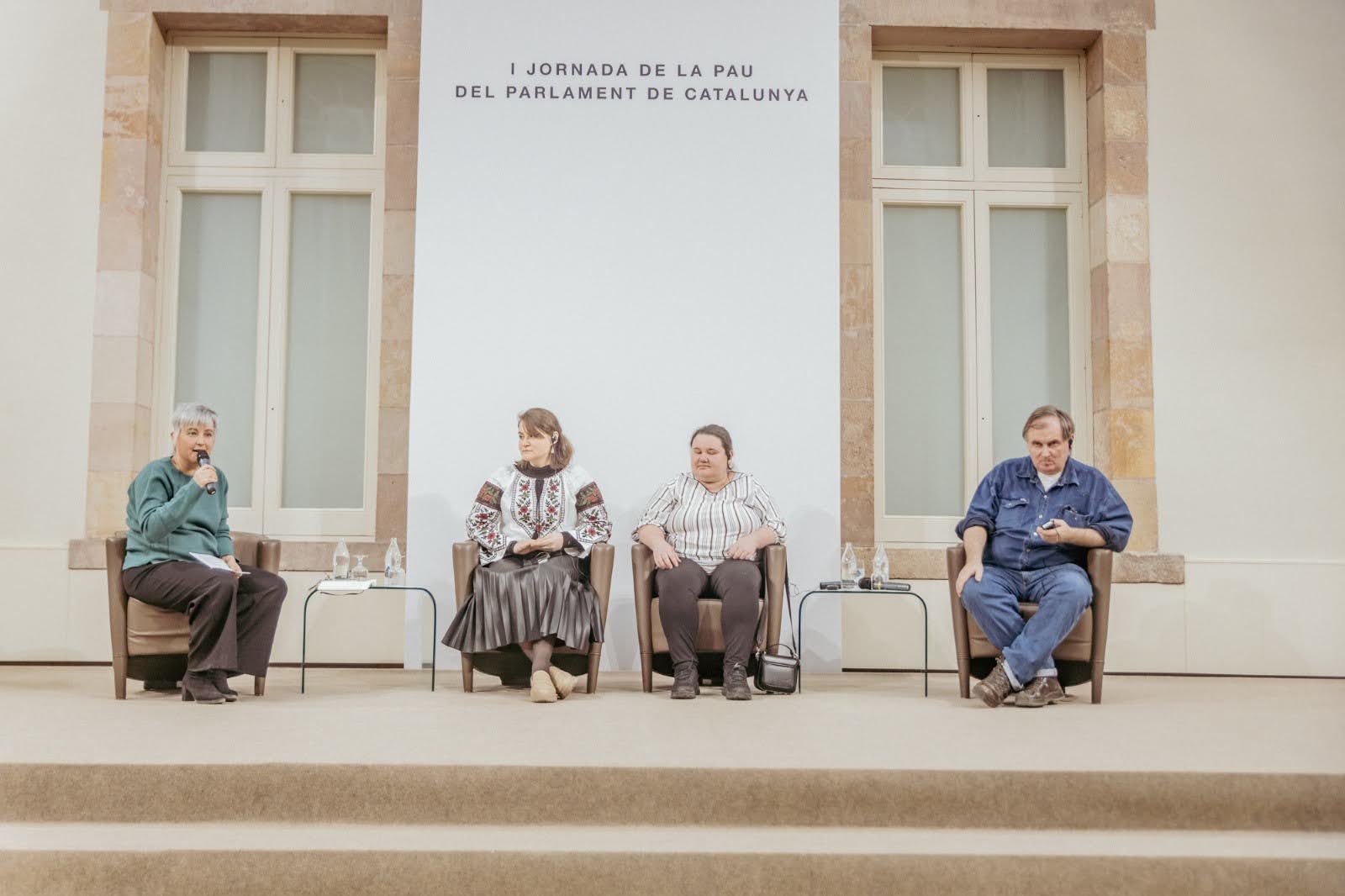
On January 30th, which is the School Day of Non-Violence and Peace, the Parliament of Catalonia will host the first Peace Day organized in collaboration with ICIP and Lafede.cat.
The event will consist of two roundtable discussions. The first one, titled “Alternatives for Peacebuilding and a Paradigm Shift: Contributions from Catalan Organizations,” will bring together five representatives from the peace axis of Lafede.cat: Albert Caramés from Fundipau, Ana Vilellas from the School of Peace Culture, Tica Font from the Centre Delàs, Luca Gervasoni from NOVACT, and Pilar Font from Brigades Internationals de Pau. They will discuss the challenges of peacebuilding in relation to the evolution of armed conflicts, the interplay between the concepts of peace and security, and present proposals for a Catalan public policy for peace. The moderator will be Montse Santolino, coordinator of Lafede.cat.
The second roundtable is titled “Civil Society in the Face of War and Authoritarian Regimes: Ukraine, Russia, and Belarus” and will feature representatives from the three Nobel Peace Prize-winning initiatives.
The event will be concluded by Gabriela Serra, President of the Catalan Council for the Promotion of Peace, and Pere Aragonès, President of the Generalitat.
The event will start at 4:00 PM and is open to the public. To attend, prior registration is required by January 25th on the Parliament’s website.
On the same day, January 30th, the delegation from the three countries is expected to meet with various representatives of Catalan institutions, including a meeting with the President of the Generalitat and the Mayor of Barcelona, Ada Colau.

Visit and Activities in Madrid
After the events in Barcelona, on January 31st, the delegation will travel to Madrid, where they will participate in various meetings with government representatives and appear before the Spanish Congress of Deputies. In the afternoon, there will be a public event titled “Peace Alternatives in the Face of War in Ukraine,” organized by the Coordinadora de Organizaciones para el Desarrollo. The event will take place at La Casa Encendida at 6:30 PM and will feature the Nobel Peace Prize representatives and the researcher Felip Daza, author of the report “Nonviolent Civil Resistance in Ukraine During the War,” published by ICIP and NOVACT.
Biographies of the Nobel Peace Prize 2022 Representatives
Oleksandra Romantsova is the Executive Director of the Center for Civil Liberties (Ukraine). She coordinates the direction of war crimes documentation and promotion of the documentation results as part of the global initiative “Tribunal for Putin.” She participates in on-the-ground missions in Ukraine.
Natallia Satsunkevich is a member of the Interim Board of the Viasna Human Rights Centre (Belarus). The Nobel Prize was awarded to Viasna’s President, Alex Bialiatski, who is currently imprisoned by the regime of Alexander Lukashenko. As part of the legal assistance team, Satsunkevich helps victims of human rights violations obtain redress. Due to her activism, she is currently undergoing a criminal trial in Belarus.
Alexander Cherkasov is the President of the Board of the Memorial Human Rights Centre (Russia). Memorial has been documenting human rights abuses in Chechnya and providing assistance to victims since the start of the armed conflict in 1994. It later expanded its work to neighboring republics as human rights abuses spread in the wider North Caucasus region.