Toward a Transformative Approach to Conflict in Youth Work
We present the BREEZE project report, a comparative study carried out in Georgia, Germany, Spain and Ukraine that explores how young people experience conflict in their communities and proposes a new conceptual and practical framework for integrating a transformative approach to conflict into youth work.
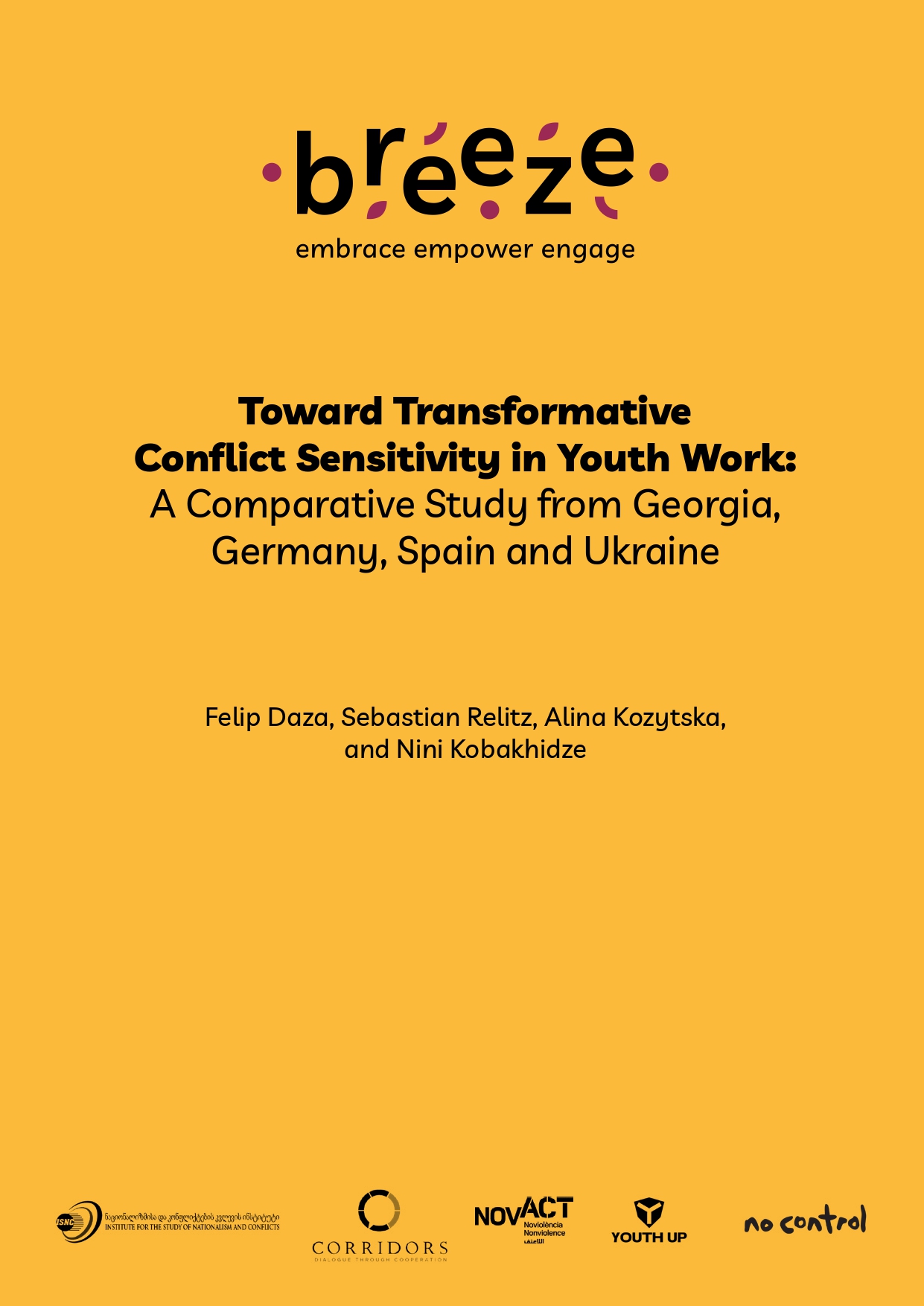
NOVACT participated in this European project alongside the Institute for the Study of Nationalism and Conflicts (Georgia), Corridors, Youth Up and No Control, with support from the European Union. The project aims to strengthen the capacities of youth workers and nonviolence practitioners to support young people affected by conflict, forced displacement and social exclusion.
Four contexts, shared challenges
The study is based on research conducted in Georgia, Germany, Catalonia and Ukraine, involving 69 young people, youth workers and experts through interviews, focus groups and validation workshops.
Despite the differences between contexts, the report identifies a number of common challenges affecting young people, including social polarization, economic precarity, the rise of hate speech, shrinking civic space and the impact of armed conflicts and their social consequences.
In Catalonia, the research focuses in particular on the impact of far-right narratives, housing insecurity, the criminalization of certain forms of activism and emerging forms of youth organization.
From conflict sensitivity to transformation
The report’s main contribution is the development of a Transformative Conflict Sensitivity framework. It argues that conflicts should not only be understood as problems to be managed, but also as opportunities to address structural inequalities and promote social transformation.
This approach moves beyond neutral or purely technical understandings of conflict and places youth participation, social justice, human rights, nonviolence and community agency at the centre of transformation processes.
The Vitamina Programme among the featured case studies
Among the initiatives highlighted in the report is NOVACT’s Vitamina Programme, an ethical leadership programme for young people at risk of social exclusion. The report presents it as an example of a methodology that combines socio-emotional development, conflict transformation, community participation and collective social action.
Download the report here.