Protecting Human Rights in Palestine: Three Palestinian Organisations Sanctioned by the US Bring Their Voices to Catalan Institutions
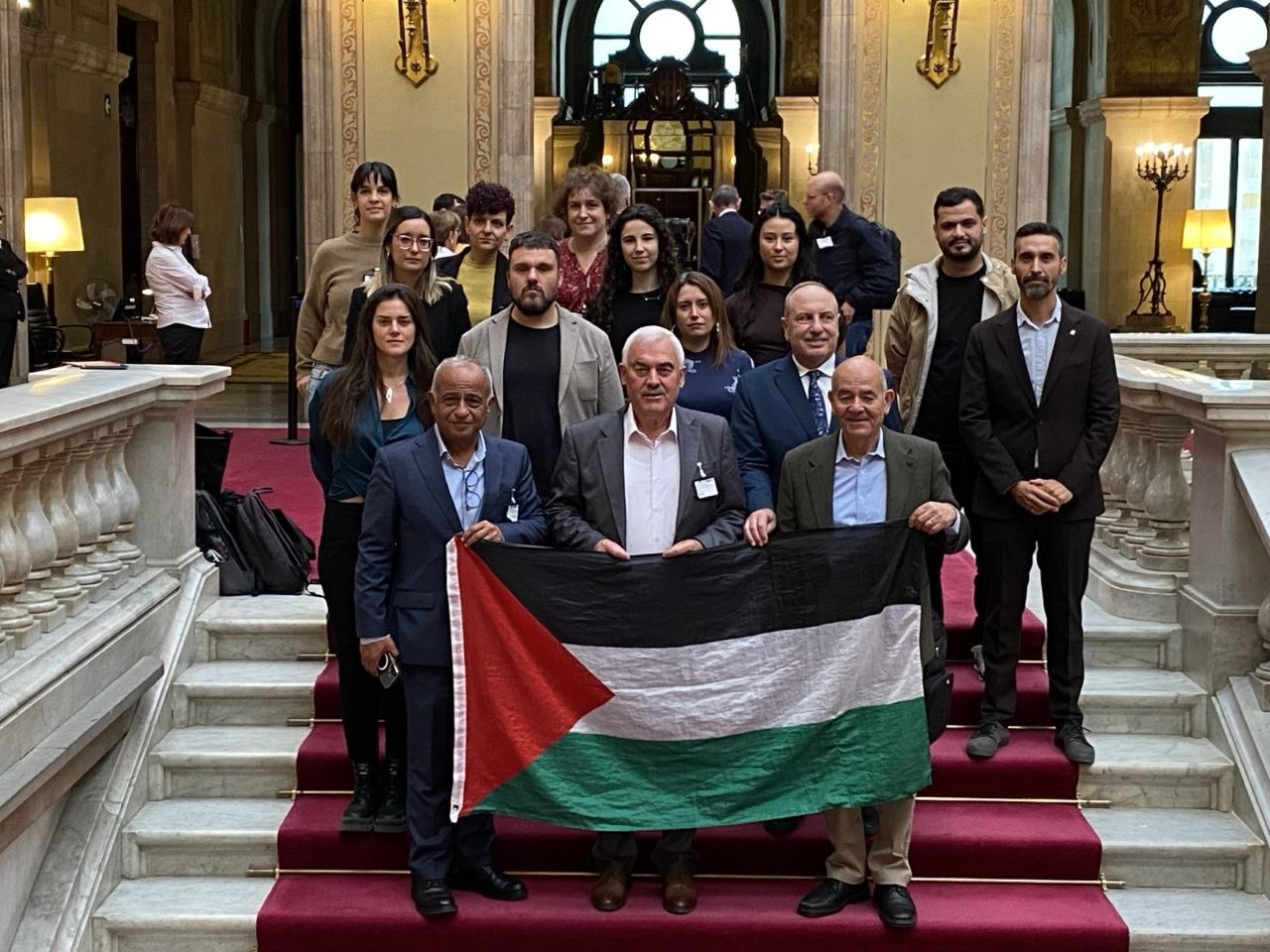
From 19 to 23 October, NOVACT, SUDS and Hèlia brought three Palestinian human rights organisations sanctioned by the United States for their cooperation with the International Criminal Court to Catalonia: Al-Haq, Al-Mezan and the Palestinian Centre for Human Rights (PCHR). During their visit, they met with representatives of the Catalan Parliament, Catalan development cooperation institutions, civil society organizations and the University of Barcelona.
The persecution of these organisations and the people representing them continues. A few days ago, we learned that the Israeli authorities had barred Shawan Jabarin, Director General of Al-Haq, from leaving Palestine. Just three weeks ago, Jabarin denounced the persecution faced by Palestinian human rights organisations and the growing difficulties they encounter in continuing their work before the Parliament of Catalonia. This latest measure highlights that pressure against those who document human rights violations and demand accountability remains ongoing.
For decades, Al-Haq, Al-Mezan and the Palestinian Centre for Human Rights (PCHR) have documented human rights violations in Palestine, supported victims and pursued cases through international justice mechanisms. Yet it is precisely this work that has exposed them to increasing arbitrary criminalisation in recent years, alongside other Palestinian civil society organisations, including Addameer, Bisan Center for Research and Development, Defense for Children International–Palestine (DCI-P), the Union of Agricultural Work Committees (UAWC), the Union of Palestinian Women’s Committees (UPWC) and the Health Work Committees (HWC). During the visit, the organisations marked five years since Israel’s unlawful criminalisation of 6 prominent human rights and civil society organisations. Multiple organisations have closed down
Between Israel’s unlawful “terrorist” designations, US sanctions and raids on their offices, some of these organisations have been forced to scale back their activities, while others have ceased operating altogether.
The sanctions do only exist to isolate organisations working on accountability for the international crimes committed against the Palestinian people, but they block the organisations access to any type of financial services provided by the banking system, in Palestine and globally. The US sanctions impose serious liability on organisations, partners and funders to the sanctioned organisations, ultimately with the aim to cripple down the work of the organisations engaging with the International Criminal Court. That isolation is precisely the aim.
These limitations and arbitrary draconian US sanctions aim to protect Israeli criminals from being held accountable by the only accountability mechanism left for Palestinian victims; the International Criminal Court. Beyond Palestinian organisations, ICC officials and UN mandate holders sanctioned by the US, these sanctions also serve to cripple and constrain the ability of civil society organisations and human rights defenders globally to operate, exposing them to increased risks, shrinking their capacity to work and engage, and sending a chilling effect across civil society.
Protection also means opening doors
Protecting human rights defenders is not just about denouncing attacks against them. It also means ensuring they can continue their work, that institutions hear directly from them, and that they do not lose the support networks they depend on.
This was the purpose of the visit, and it reflects the work we have been carrying out alongside Palestinian civil society for years.
Over the course of just a few days, the delegation met with members of four political groups in the Parliament of Catalonia and held a press conference. They also met with the Catalan Agency for Development Cooperation, Barcelona City Council – District 11, and Casa Palestina to explain how the sanctions threaten their funding and operations, and to identify the support they need to continue their work.
In light of the continued escalation of pressure against Palestinian human rights organisations and their representatives, we urgently call on EU institutions to take immediate, targeted and effective action to protect Al-Haq and its Director General, Shawan Jabarin. We also urge them to exert pressure on Israel to revoke the travel ban imposed on Jabarin and put an end to its attacks on Palestinian civil society and human rights defenders.
At the University of Barcelona, the delegation met with the Chair of Palestinian Studies to discuss the documentation of human rights violations and mechanisms for accountability. They also held meetings with Catalan civil society organisations to strengthen and expand their networks of support, and advocacy efforts to raise awareness about the ongoing international crimes in Palestine.
The fact that three organisations sanctioned by the United States were able to speak directly to Catalan institutions about their situation is significant. As Catalan based civil society, we urge all other actors, officials, and civil society to engage with our Palestinian partners, provide spaces and amplify the work carried out by organisations in Palestine.
We have done this before — and it works
In December 2025, NOVACT, SUDS and Hèlia, together with Paz con Dignidad, Mundubat and Irídia, brought representatives of these same organisations to the European Parliament.
That meeting resulted in a letter signed by more than 30 Members of the European Parliament, calling on the European Union to take concrete measures to protect the Palestinian population and uphold international law.
What we are calling for
The Palestinian organisations made it clear that solidarity must be backed by concrete action. Their demands include:
- Guaranteeing the protection of their staff and activities.
- Activating the EU Blocking Statute, and any other mechanisms, to protect Palestinian civil society organisations and their European partners from US sanctions.
- Maintaining and increasing political and financial support for Palestinian civil society.
- Imposing political and economic sanctions and a full arms embargo on Israel to ensure compliance with international law.
- Holding Israeli political, military, and government officials accountable for war crimes, crimes against humanity, genocide, and other serious violations of international law committed against the Palestinian people.
What comes next: Follow-up and Continued Support
These demands are now on the table of the parliamentary groups and institutions that met with the delegation.
Over the coming months, we will follow up on the commitments and discussions arising from these meetings and continue supporting these organisations so they can carry on their essential work.