
Amid Intensifying Russian Attacks and Suspended Elections, Kyiv Engages Citizens in Shaping the City’s Future
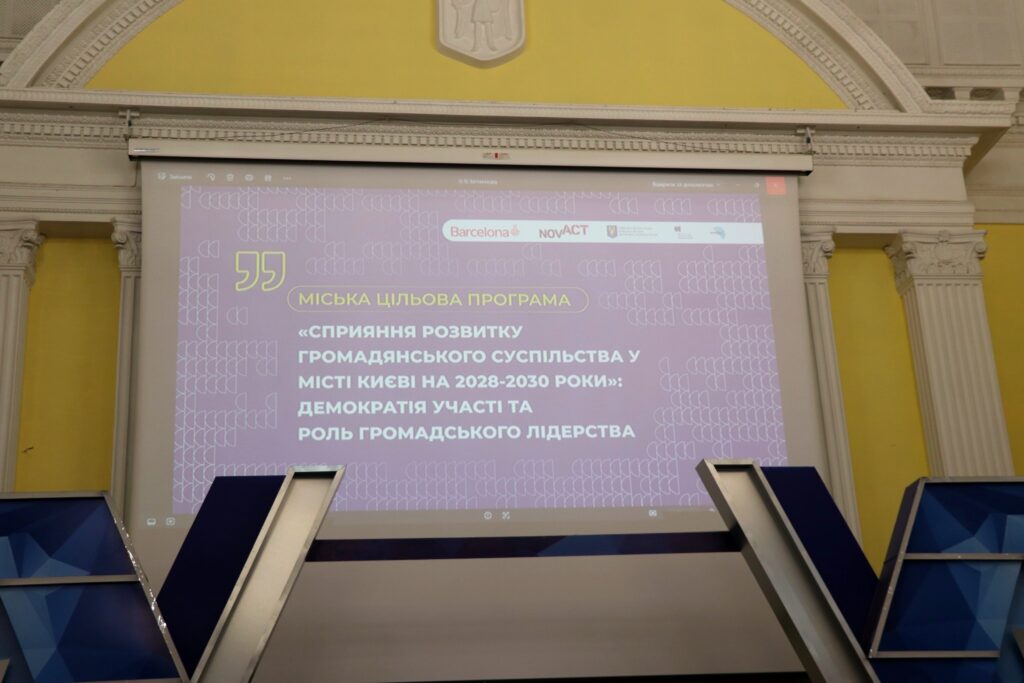
NOVACT has supported Kyiv City Council in a public consultation in which 96 people and organisations put forward proposals for the city’s future civil society development programme, with funding from Barcelona City Council.
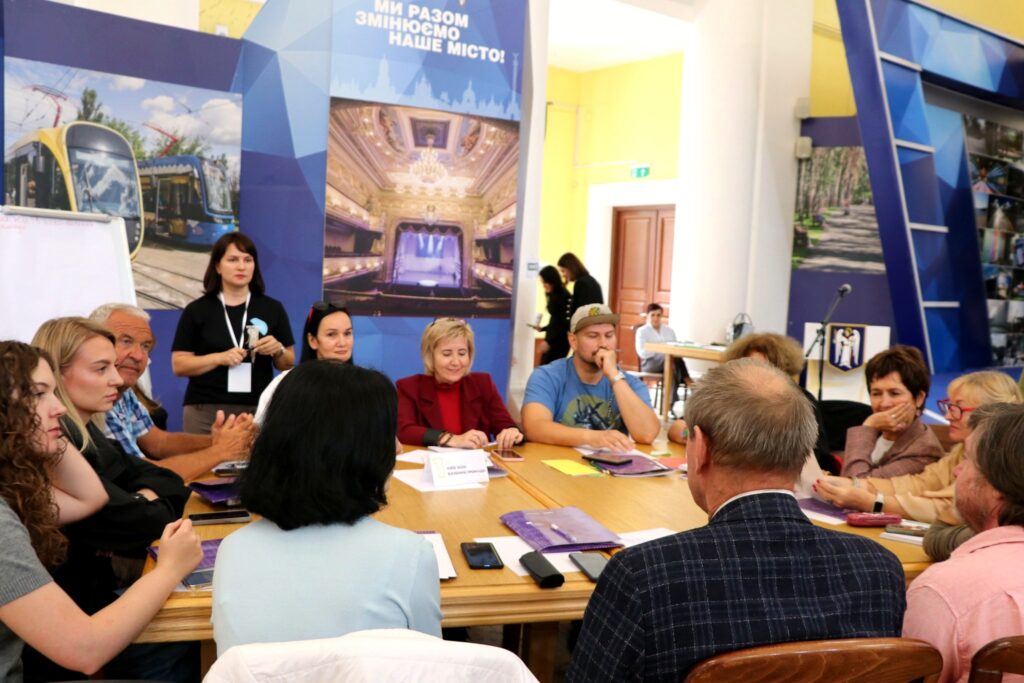
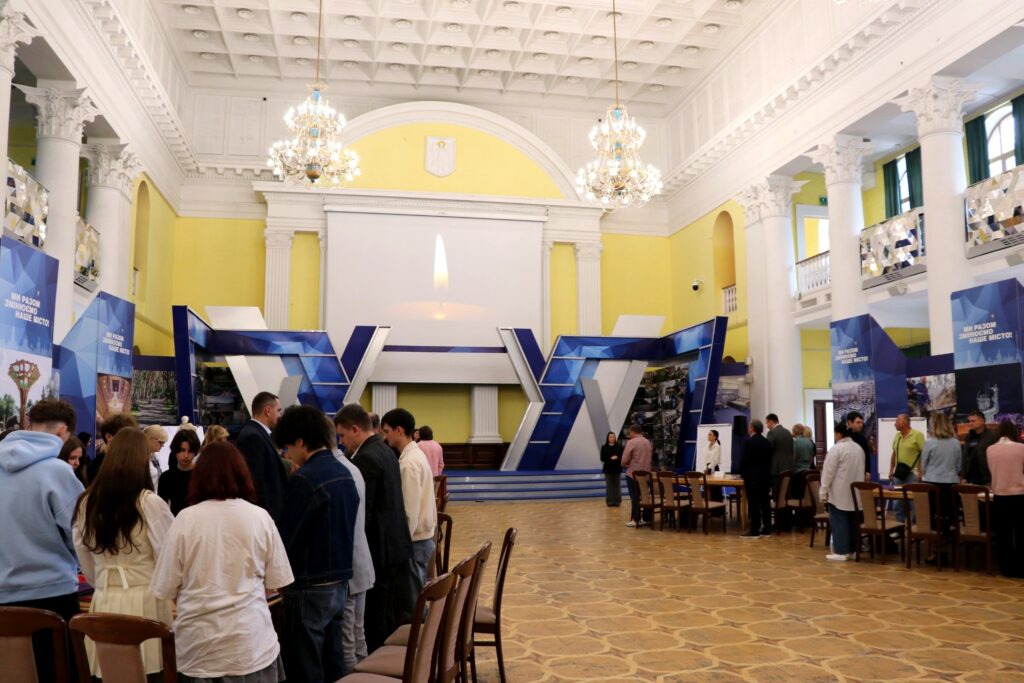
In Kyiv, talking about the future means first talking about how to get through the winter. On 18 September, close to 100 people gathered around tables in the Column Hall of the Kyiv City State Administration to put forward proposals for the city’s civil society development programme for 2028–2030. The discussions addressed the risk of prolonged power outages in the coming months, the city’s shelter network, how to ensure continuity of education for schoolchildren, and the state of infrastructure in a city that continues to come under Russian attack.
The consultation comes at an exceptional time for Ukrainian democracy. With martial law in force since the start of Russia’s full-scale invasion, Ukrainian law does not allow elections to be held, including local elections. In this context, while war pushes in the opposite direction, towards faster decision-making, concentrated in fewer hands and justified by security concerns, maintaining and strengthening other forms of participation allows citizens to continue having a say in shaping the policies of their city.
Around the tables were also some of those most affected by the consequences of the war: internally displaced people, people with disabilities, veterans, young people, volunteers and civil society organisations, alongside city officials and international organisations. The consultation, held as part of Ukraine’s 6th Civil Society Week, was organised by Kyiv City Council’s Department of Public Communications with the support of NOVACT and funding from Barcelona City Council.
Taking part while there is still room to shape decisions
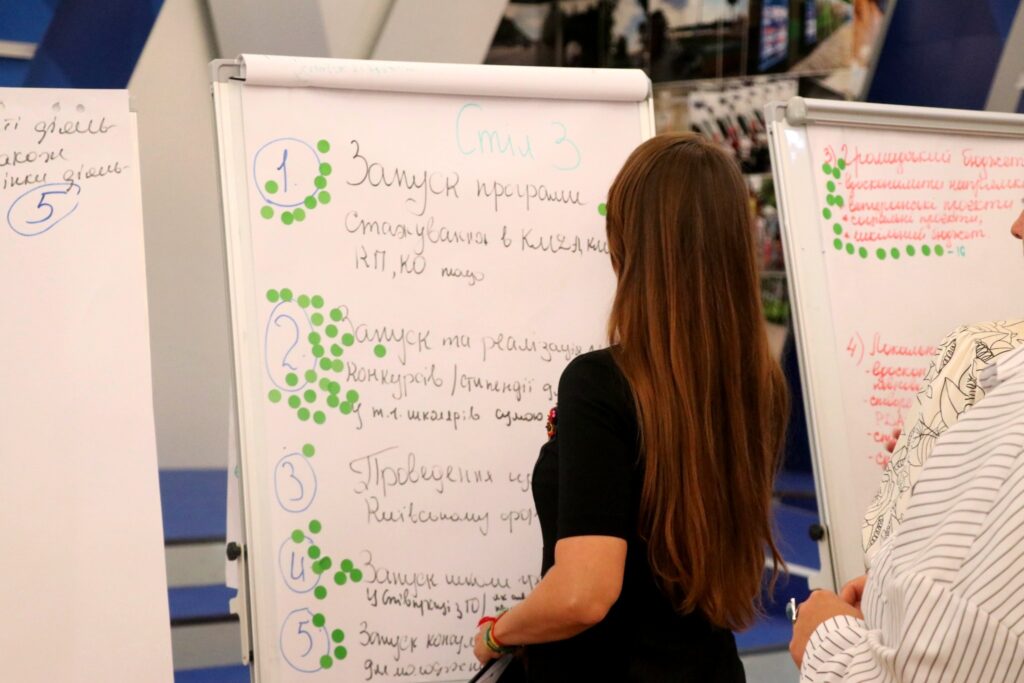
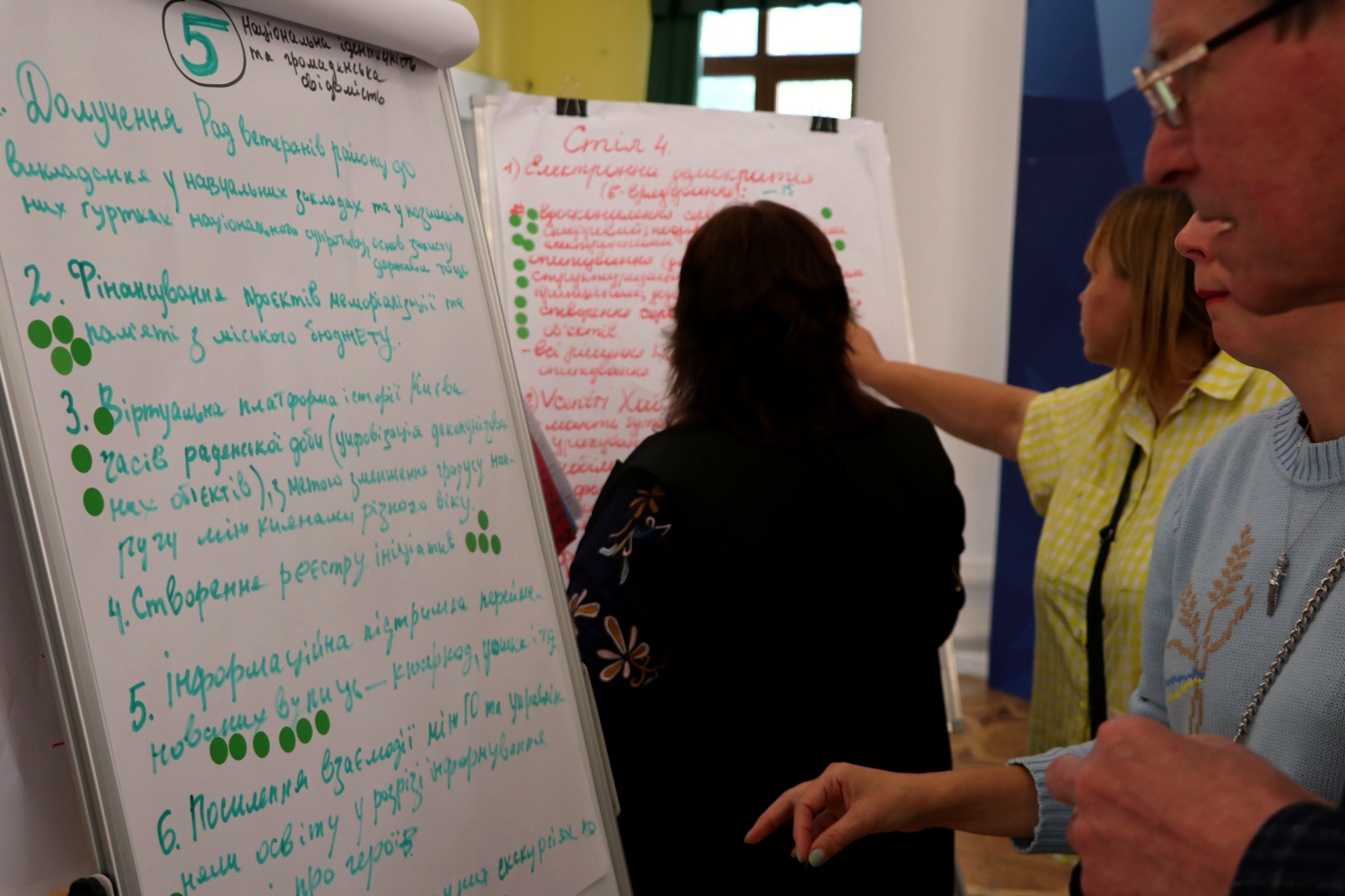
Using the World Café format, participants moved between tables, shared experiences and perspectives, and ultimately voted on the proposals to establish their priorities. Discussions covered the relationship between the city government and civil society organisations, the participatory tools Kyiv needs, and the role of young people in public life. The consultation took place at an early stage of the programme, while its priorities are still being shaped rather than at the end of the process. The recommendations will be compiled into an analytical report and considered by the city administration as it finalises the programme.
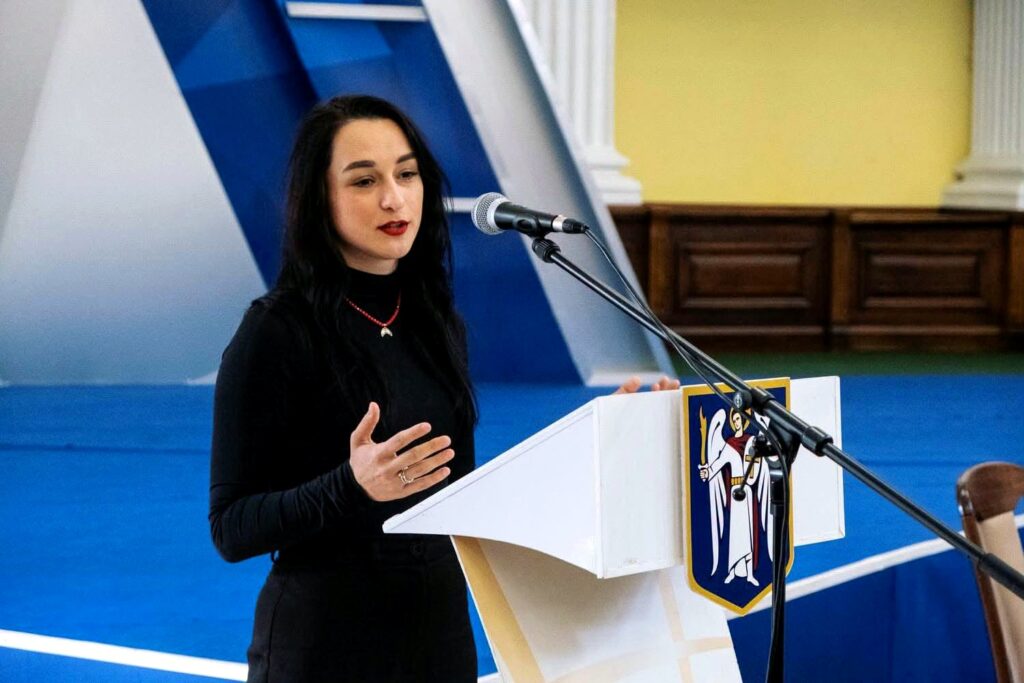
“Civil society development is impossible without constant dialogue between the community and the city government” said Olesya Zubrytska, Director of the Department of Public Communications. “That is why it is important for us not only to inform Kyiv residents about the city’s decisions, but also to create opportunities for them to participate directly in shaping city policy.”
Why we are involved
“Ukraine is not only defending its territory and sovereignty; it is also showing us what democratic resilience can mean in the midst of war. Across the country, municipalities, civil society organisations, volunteers and communities have developed extraordinary forms of organisation to protect people, maintain social cohesion and keep democratic life functioning under the immense pressure created by Russia’s full-scale invasion.
In this sense, Ukraine is becoming an important reference for those of us working on peace and nonviolent action. Democracy itself — and particularly local democracy — can become a form of resistance. When citizens organise, participate in public decisions and work together with local institutions, they strengthen a democratic fabric that occupation and authoritarianism seek to weaken. Local democracy becomes, in this sense, one of the walls against Russian imperialism: not a wall built with weapons, but with participation, social organisation and the capacity of communities to determine their own future.
This is also why reconstruction matters politically. Ukraine cannot be rebuilt only through decisions taken by governments and international donors. Ukrainians themselves must be protagonists in defining the country and the cities that emerge from this war. For NOVACT, supporting spaces such as this one in Kyiv is part of a broader commitment to peace: strengthening civil society, protecting democratic spaces and ensuring that the extraordinary resilience Ukrainians have demonstrated during the war becomes one of the foundations of a democratic and peaceful future.”
— Luca Gervasoni, Director of NOVACT
The consultation represents the culmination of 2 years of close collaboration, technical assistance and knowledge exchange between Barcelona and Kyiv. Throughout this process, Barcelona Council and NOVACT have worked alongside Kyiv’s municipal team, providing methodological guidance, capacity-building and facilitation support to strengthen the city’s approach to citizen participation.
Beyond this specific consultation, the collaboration pursues a broader strategic objective: to move from isolated participatory initiatives towards sustainable, institutionalised mechanisms that enable residents to actively shape public decision-making and contribute to the democratic reconstruction of their city.
Ukraine faces a reconstruction process that will, to a large extent, be shaped by governments and international donors. Ensuring that priorities are also defined from the ground up, by those living with the consequences of the war every day, helps ensure that reconstruction responds to the real needs of the population.
For NOVACT, this is also where the purpose of nonviolent action in conflict settings lies: strengthening an organised civil society capable of resisting without reproducing the authoritarian logic of those attacking it, while also having the capacity to influence decisions and play an active role in the country’s reconstruction.