

Kharkiv’s underground school: safeguarding the right to education amid Russian attacks
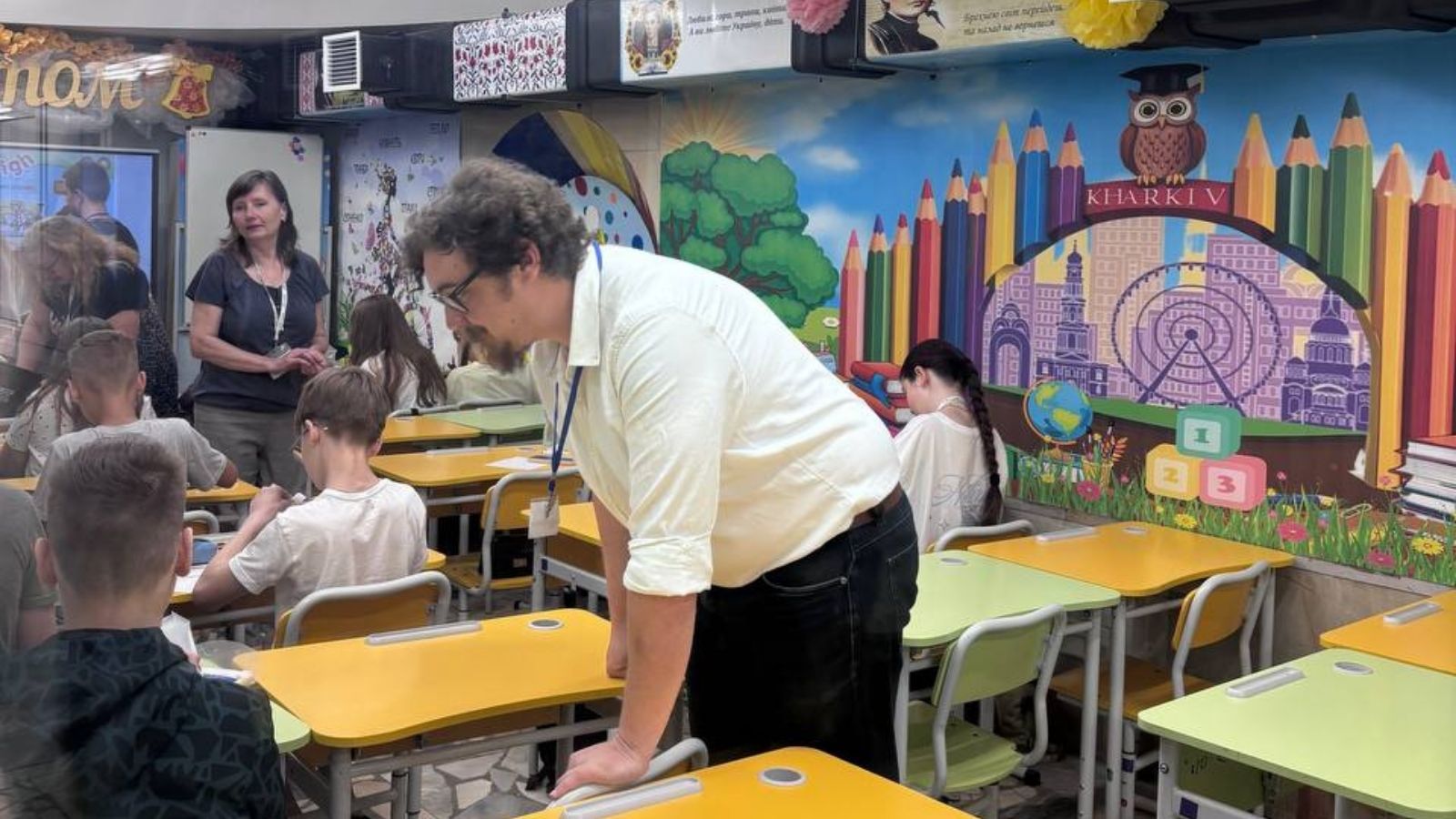
In Kharkiv, one of the Ukrainian cities hardest hit by the war, thousands of children continue to attend in-person classes every day in schools built underground. Launched by the local authorities, the initiative has become one of the most remarkable examples of community resilience in a city facing constant bombardment.
Beneath Freedom Square, in the centre of Kharkiv, thousands of children continue to do something as ordinary as going to school.
Where families sought shelter from bombardment during the first months of the full-scale invasion, classrooms are now full of life. Deep within the city’s metro network, children up to the age of 10 attend free in-person classes every day, follow the official curriculum, spend time with their classmates and receive meals during the school day.
A response to an extraordinary situation
Faced with the destruction of numerous schools and the risks affecting many others across the city, Kharkiv decided not to give up on in-person education.
The response was to transform some of the city’s safest spaces into educational facilities adapted to the needs of young children. The project helps ensure continuity of education in a city where air-raid alerts and constant threats remain part of everyday life due to its proximity to the front line and systematic Russian attacks.
During NOVACT’s visit to Kharkiv, municipal authorities presented the initiative as one of the most innovative responses developed during the war. The model is already inspiring other frontline cities seeking to safeguard the right to education in conflict settings.
More than a school
Beyond their educational role, these spaces help children maintain routines and opportunities for social interaction that are particularly important in contexts marked by uncertainty.
Education is also a form of resistance
Kharkiv’s underground school is much more than an emergency response. It demonstrates how communities can adapt to extreme circumstances and how public services can continue to function even in highly adverse conditions.
For NOVACT, initiatives like this provide a better understanding of how communities organise to protect fundamental rights and sustain collective life in the midst of war.
Because in Kharkiv, education is also a form of resistance.


